
ranking poker casino barcelona — secretos revelados | barcelona casino

ranking poker casino barcelona — torneos más emocionantes de 2026

ranking poker casino barcelona se enfrenta a un año de cambios significativos, impulsados por la innovación y la creciente profesionalización del sector. Los torneos más prestigiosos han elevado el nivel de exigencia, obligando a los participantes a perfeccionar sus técnicas. En este contexto, poker barcelona torneos ranking emerge como una herramienta indispensable para aquellos que aspiran a destacar en las mesas.

Ver también:

Aspectos clave de poker casino barcelona clasificacion en esta reseña

Póker Challenge: A Comprehensive Guide to Mastering the Game

Póker, a game of skill, strategy, and psychological warfare, has captivated players for centuries. From smoky backrooms to glamorous casinos and now to the digital realm, the challenge of outwitting opponents and mastering the odds remains timeless. This guide delves into every aspect of the game, from fundamental rules to advanced tactics, bankroll management, and the mental fortitude required to succeed. Whether you’re a novice looking to learn the basics or a seasoned player aiming to refine your edge, this comprehensive exploration will equip you with the knowledge to elevate your game.

Understanding the Basics: Rules and Hand Rankings

Before diving into strategy, one must grasp the foundational elements. Poker is played with a standard 52-card deck, and the most popular variant, Texas Hold’em, involves each player receiving two private cards (hole cards) and five community cards dealt face-up in stages: the flop (three cards), the turn (one card), and the river (one card). Players combine their hole cards with the community cards to form the best possible five-card hand. The hand rankings, from highest to lowest, are: Royal Flush (Ace-high straight flush), Straight Flush (five consecutive cards of the same suit), Four of a Kind, Full House (three of a kind plus a pair), Flush (five cards of the same suit, not in sequence), Straight (five consecutive cards of mixed suits), Three of a Kind, Two Pair, One Pair, and High Card. Understanding these rankings is non-negotiable, as every decision hinges on evaluating hand strength relative to opponents’ possible holdings.

The Flow of a Hand: Betting Rounds and Actions

Each hand begins with two forced bets: the small blind and the big blind, which ensure there’s something to play for. Players then receive their hole cards and must decide to fold (discard their hand), call (match the current bet), raise (increase the bet), or check (pass the action without betting, only possible if no bet has been made). The betting rounds occur pre-flop, after the flop, after the turn, and after the river. The action proceeds clockwise, and the player who makes the last aggressive action (bet or raise) may be faced with re-raises. The goal is not just to have the best hand but to win the pot through a combination of superior hand strength and strategic betting that forces opponents to fold. In a showdown, if more than one player remains after the final betting round, they reveal their cards, and the best hand takes the pot. However, a player can win without showing cards by betting aggressively enough to make all opponents fold.

como jugar a las tragaperras 2026 — estrategias ganadoras

Position and Its Strategic Importance

Position is arguably the most critical concept in poker. Players who act later in each betting round have more information because they’ve seen how opponents have acted. The dealer button rotates clockwise, and the two players to the left are the blinds. The early positions (under the gun and the blinds) are at a disadvantage because they must act without knowing what others will do. The late positions (button and cutoff) are advantageous, allowing players to play a wider range of hands profitably. For example, a player in the cutoff can raise with a speculative hand like 7-8 suited if everyone has folded, aiming to steal the blinds. Conversely, an early-position player must tighten their range, only playing premium hands like high pairs or strong suited aces, because they risk being raised by later players. Mastering position means adjusting your hand selection and aggression based on where you sit relative to the dealer, a skill that separates amateurs from professionals.

Starting Hand Selection: The Foundation of Pre-Flop Play

Choosing which hands to play is the first major decision. A common framework is to categorize hands into tiers. Premium hands: AA, KK, QQ, AK (suited or offsuit), and sometimes JJ. These should always be raised or re-raised to build the pot and narrow the field. Strong hands: TT, 99, AQ, AJ, KQ, and suited connectors like J-T or T-9. These can be played in late position or with limpers, but should be cautious if facing aggression. Speculative hands: small pairs (22-77), suited aces (A-2s to A-5s), and suited connectors (5-6s through 9-Ts). These are best played in position for a cheap price, hoping to hit a strong flop (set, flush, or straight draw). Trash hands like 7-2 offsuit should be folded almost always, unless you’re in the big blind and can check for free. The exact range expands or contracts based on position, stack depth, and opponent tendencies. For example, in a short-handed game (6 players or less), you can play more hands because the blinds come around faster, and opponents are forced to defend wider.

Betting Strategies: Aggression, Sizing, and Bluffing

Poker is a game of aggression. Passive players who only call or check are easily exploited because they rarely put pressure on opponents. The key is to bet and raise with both strong hands (for value) and weak hands (as bluffs), creating a balanced range that’s hard to read. Bet sizing is crucial: a standard continuation bet (c-bet) after raising pre-flop is often 50-75% of the pot. A larger bet (pot-sized or more) may indicate strength or a desire to protect your hand, while a smaller bet (25-50%) can be used to control pot size or induce calls. Bluffing is not just about representing a strong hand; it’s about telling a consistent story. For instance, if you raise pre-flop, c-bet on a dry flop (like K-7-2 rainbow), and then bet again on the turn when a blank hits, you’re representing a strong king. However, bluffs work best against tight opponents who fold too often, and you should avoid bluffing calling stations who never fold. Semi-bluffing with a drawing hand (like a flush draw) is powerful because you have two ways to win: your opponent folds, or you hit your draw and win a bigger pot. Always consider the pot odds and implied odds—if you’re drawing, you need to know what you’ll win if you hit versus what it costs to continue.

Reading Opponents: Tells, Patterns, and Adjustments

While online poker removes physical tells, live play offers subtle cues: nervous twitches, breathing patterns, chip handling, and eye movements. But more reliable are betting patterns. Does a player raise big with strong hands and limp with weak ones? Do they c-bet too often or not enough? Do they fold to pressure on the river? These tendencies create exploitable patterns. For example, a tight player who suddenly raises on the river likely has a monster, so you should fold your one-pair hand. Conversely, a loose-aggressive player (LAG) may be bluffing frequently, so you can call them down with medium-strength hands. The key is to observe, categorize, and adjust. If you’re playing against a nit (tight-passive), you can steal blinds relentlessly. Against a maniac (loose-aggressive), you should tighten up and let them bluff into your strong hands. Also, pay attention to bet timing online—a quick bet often indicates weakness (they’ve decided to bluff), while a delayed bet may be a deliberate act. Always take notes on opponents to build a profile, and be aware that skilled players will also be reading you, so vary your play to avoid becoming predictable.

Pot Odds, Equity, and Expected Value

Mathematical decision-making is the backbone of profitable poker. Pot odds compare the current pot size to the cost of a call. If the pot is $100 and you must call $20, you’re getting 5:1 odds, meaning you need to win at least 1 in 6 times (16.7%) to break even. If your hand has a 20% chance of winning (e.g., a flush draw with one card to come), the call is profitable in the long run. Equity is your percentage chance of winning the pot at a given moment. You can calculate rough equity using the rule of 2 and 4: with two cards to come, multiply your outs by 4; with one card to come, multiply by 2. Outs are cards that improve your hand. For example, a flush draw has 9 outs, so with two cards to come, you have roughly 36% equity. Expected value (EV) is the average amount you win or lose per decision. A positive EV play is one that yields profit over time, even if it loses sometimes. For instance, calling a bet with a flush draw when you’re getting the right odds is +EV, even if you miss 65% of the time. Conversely, chasing a straight draw with poor odds is -EV.

barcelona casino en Cifras: Datos Clave

barcelona casino en Cifras: Datos Clave
Feature Details
Proveedores Microgaming, NetEnt y otros
Torneos Semanales con premios €84,700
Juegos de mesa Ruleta, blackjack, póker y más
Ganancia récord D.B. ganó 12,400 € en Mega Moolah
Monedas EUR y criptomonedas

Bonos y Términos de Póker en barcelona casino

  • bono de 75% para tu primer depósito
  • 75 giros gratis sin requisito de depósito
  • 200% de bonificación en tu próximo depósito
  • 45x requisito en 14 días
  • 45x apuesta en 21 días
  • 50x apuesta requerida

Galería de barcelona casino
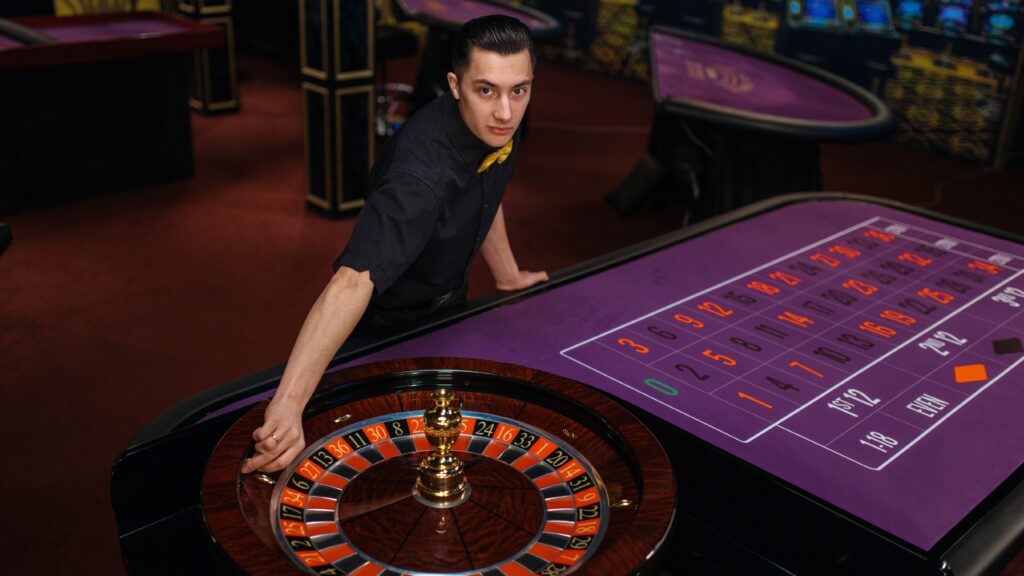
ranking poker casino barcelona

Guía rápida: activa mejores salas poker barcelona desde el principio

Abre una cuenta en barcelona casino y verifica tu correo electrónico.

Realiza tu primer depósito con el importe mínimo de €19.

Activa el bono de bienvenida de 150% de bonificación en tu próximo depósito en la sección de promociones.

Revisa los requisitos de apuesta de 30x apuesta en 21 días antes de jugar.

Familiarízate con las mesas de póker disponibles y elige la que mejor se adapte a tu nivel.

Comienza a jugar y aplica una estrategia básica para maximizar tus opciones.

¿Qué debes saber acerca de mejores salas poker barcelona?

¿Qué tipo de torneos de póker ofrece barcelona casino?

barcelona casino organiza una variedad de torneos, incluyendo sit-and-go, torneos multimesa y series especiales con premios garantizados.

¿Cuál es el depósito mínimo para jugar al póker en barcelona casino?

El depósito mínimo para acceder a las mesas de póker es de €19.

¿Ofrece barcelona casino un bono de bienvenida para jugadores de póker?

Sí, barcelona casino ofrece un bono de bienvenida de 150% de bonificación en tu próximo depósito con un requisito de apuesta de 30x apuesta en 21 días.

¿Está barcelona casino regulado por alguna licencia?

Sí, barcelona casino opera bajo la licencia de DGOJ — Dirección General de Ordenación del Juego, lo que garantiza un juego seguro y justo.

¿Puedo jugar al póker en la aplicación móvil de barcelona casino?

Sí, barcelona casino dispone de una aplicación móvil compatible con iOS y Android donde puedes jugar al póker y participar en torneos.

casino en linea nuevos 2026 — casinos nuevos online

ranking poker casino barcelona presenta una interfaz intuitiva y fácil de navegar para los usuarios.

Cómo limita barcelona casino el juego problemático

El juego está destinado exclusivamente a mayores de 18 años. barcelona casino opera bajo la supervisión de la Dirección General de Ordenación del Juego (DGOJ) en España. Si sientes que pierdes el control, puedes inscribirte en el Registro General de Interdicciones de Acceso al Juego (RGIAJ) para autoexcluirte. Para ayuda profesional, contacta con FEJAR en el 900 200 225 o visita jugarBIEN.es. Te recomendamos establecer límites de depósito y tiempo, y jugar siempre como entretenimiento, nunca para recuperar pérdidas. Juega con responsabilidad.

Sobre el autor: . Analista financiero y crítico de casinos con 12 años en el sector. Se enfoca en la seguridad de pagos, métodos de depósito y retiro, y transparencia de los operadores.


CategoriesUncategorized

ranking poker casino barcelona — secretos revelados | barcelona casino

ranking poker casino barcelona — torneos más emocionantes de 2026

ranking poker casino barcelona se enfrenta a un año de cambios significativos, impulsados por la innovación y la creciente profesionalización del sector. Los torneos más prestigiosos han elevado el nivel de exigencia, obligando a los participantes a perfeccionar sus técnicas. En este contexto, poker barcelona torneos ranking emerge como una herramienta indispensable para aquellos que aspiran a destacar en las mesas.

Ver también:

Aspectos clave de poker casino barcelona clasificacion en esta reseña

Póker Challenge: A Comprehensive Guide to Mastering the Game

Póker, a game of skill, strategy, and psychological warfare, has captivated players for centuries. From smoky backrooms to glamorous casinos and now to the digital realm, the challenge of outwitting opponents and mastering the odds remains timeless. This guide delves into every aspect of the game, from fundamental rules to advanced tactics, bankroll management, and the mental fortitude required to succeed. Whether you’re a novice looking to learn the basics or a seasoned player aiming to refine your edge, this comprehensive exploration will equip you with the knowledge to elevate your game.

Understanding the Basics: Rules and Hand Rankings

como jugar tragaperras 2026 — tácticas avanzadas

Before diving into strategy, one must grasp the foundational elements. Poker is played with a standard 52-card deck, and the most popular variant, Texas Hold’em, involves each player receiving two private cards (hole cards) and five community cards dealt face-up in stages: the flop (three cards), the turn (one card), and the river (one card). Players combine their hole cards with the community cards to form the best possible five-card hand. The hand rankings, from highest to lowest, are: Royal Flush (Ace-high straight flush), Straight Flush (five consecutive cards of the same suit), Four of a Kind, Full House (three of a kind plus a pair), Flush (five cards of the same suit, not in sequence), Straight (five consecutive cards of mixed suits), Three of a Kind, Two Pair, One Pair, and High Card. Understanding these rankings is non-negotiable, as every decision hinges on evaluating hand strength relative to opponents’ possible holdings.

The Flow of a Hand: Betting Rounds and Actions

Each hand begins with two forced bets: the small blind and the big blind, which ensure there’s something to play for. Players then receive their hole cards and must decide to fold (discard their hand), call (match the current bet), raise (increase the bet), or check (pass the action without betting, only possible if no bet has been made). The betting rounds occur pre-flop, after the flop, after the turn, and after the river. The action proceeds clockwise, and the player who makes the last aggressive action (bet or raise) may be faced with re-raises. The goal is not just to have the best hand but to win the pot through a combination of superior hand strength and strategic betting that forces opponents to fold. In a showdown, if more than one player remains after the final betting round, they reveal their cards, and the best hand takes the pot. However, a player can win without showing cards by betting aggressively enough to make all opponents fold.

link coin máster — análisis de proveedores | link coin máster

Position and Its Strategic Importance

casino crypto 2026 — la mejor selección
casino italia 2026 — casino italia bono

Position is arguably the most critical concept in poker. Players who act later in each betting round have more information because they’ve seen how opponents have acted. The dealer button rotates clockwise, and the two players to the left are the blinds. The early positions (under the gun and the blinds) are at a disadvantage because they must act without knowing what others will do. The late positions (button and cutoff) are advantageous, allowing players to play a wider range of hands profitably. For example, a player in the cutoff can raise with a speculative hand like 7-8 suited if everyone has folded, aiming to steal the blinds. Conversely, an early-position player must tighten their range, only playing premium hands like high pairs or strong suited aces, because they risk being raised by later players. Mastering position means adjusting your hand selection and aggression based on where you sit relative to the dealer, a skill that separates amateurs from professionals.

Starting Hand Selection: The Foundation of Pre-Flop Play

Choosing which hands to play is the first major decision. A common framework is to categorize hands into tiers. Premium hands: AA, KK, QQ, AK (suited or offsuit), and sometimes JJ. These should always be raised or re-raised to build the pot and narrow the field. Strong hands: TT, 99, AQ, AJ, KQ, and suited connectors like J-T or T-9. These can be played in late position or with limpers, but should be cautious if facing aggression. Speculative hands: small pairs (22-77), suited aces (A-2s to A-5s), and suited connectors (5-6s through 9-Ts). These are best played in position for a cheap price, hoping to hit a strong flop (set, flush, or straight draw). Trash hands like 7-2 offsuit should be folded almost always, unless you’re in the big blind and can check for free. The exact range expands or contracts based on position, stack depth, and opponent tendencies. For example, in a short-handed game (6 players or less), you can play more hands because the blinds come around faster, and opponents are forced to defend wider.

Betting Strategies: Aggression, Sizing, and Bluffing

Poker is a game of aggression. Passive players who only call or check are easily exploited because they rarely put pressure on opponents. The key is to bet and raise with both strong hands (for value) and weak hands (as bluffs), creating a balanced range that’s hard to read. Bet sizing is crucial: a standard continuation bet (c-bet) after raising pre-flop is often 50-75% of the pot. A larger bet (pot-sized or more) may indicate strength or a desire to protect your hand, while a smaller bet (25-50%) can be used to control pot size or induce calls. Bluffing is not just about representing a strong hand; it’s about telling a consistent story. For instance, if you raise pre-flop, c-bet on a dry flop (like K-7-2 rainbow), and then bet again on the turn when a blank hits, you’re representing a strong king. However, bluffs work best against tight opponents who fold too often, and you should avoid bluffing calling stations who never fold. Semi-bluffing with a drawing hand (like a flush draw) is powerful because you have two ways to win: your opponent folds, or you hit your draw and win a bigger pot. Always consider the pot odds and implied odds—if you’re drawing, you need to know what you’ll win if you hit versus what it costs to continue.

Reading Opponents: Tells, Patterns, and Adjustments

While online poker removes physical tells, live play offers subtle cues: nervous twitches, breathing patterns, chip handling, and eye movements. But more reliable are betting patterns. Does a player raise big with strong hands and limp with weak ones? Do they c-bet too often or not enough? Do they fold to pressure on the river? These tendencies create exploitable patterns. For example, a tight player who suddenly raises on the river likely has a monster, so you should fold your one-pair hand. Conversely, a loose-aggressive player (LAG) may be bluffing frequently, so you can call them down with medium-strength hands. The key is to observe, categorize, and adjust. If you’re playing against a nit (tight-passive), you can steal blinds relentlessly. Against a maniac (loose-aggressive), you should tighten up and let them bluff into your strong hands. Also, pay attention to bet timing online—a quick bet often indicates weakness (they’ve decided to bluff), while a delayed bet may be a deliberate act. Always take notes on opponents to build a profile, and be aware that skilled players will also be reading you, so vary your play to avoid becoming predictable.

Pot Odds, Equity, and Expected Value

Mathematical decision-making is the backbone of profitable poker. Pot odds compare the current pot size to the cost of a call. If the pot is $100 and you must call $20, you’re getting 5:1 odds, meaning you need to win at least 1 in 6 times (16.7%) to break even. If your hand has a 20% chance of winning (e.g., a flush draw with one card to come), the call is profitable in the long run. Equity is your percentage chance of winning the pot at a given moment. You can calculate rough equity using the rule of 2 and 4: with two cards to come, multiply your outs by 4; with one card to come, multiply by 2. Outs are cards that improve your hand. For example, a flush draw has 9 outs, so with two cards to come, you have roughly 36% equity. Expected value (EV) is the average amount you win or lose per decision. A positive EV play is one that yields profit over time, even if it loses sometimes. For instance, calling a bet with a flush draw when you’re getting the right odds is +EV, even if you miss 65% of the time. Conversely, chasing a straight draw with poor odds is -EV.

barcelona casino en Cifras: Datos Clave

barcelona casino en Cifras: Datos Clave
Feature Details
Proveedores Microgaming, NetEnt y otros
Torneos Semanales con premios €84,700
Juegos de mesa Ruleta, blackjack, póker y más
Ganancia récord D.B. ganó 12,400 € en Mega Moolah
Monedas EUR y criptomonedas

Bonos y Términos de Póker en barcelona casino

  • bono de 75% para tu primer depósito
  • 75 giros gratis sin requisito de depósito
  • 200% de bonificación en tu próximo depósito
  • 45x requisito en 14 días
  • 45x apuesta en 21 días
  • 50x apuesta requerida

Galería de barcelona casino

ranking poker casino barcelona

Guía rápida: activa mejores salas poker barcelona desde el principio

Abre una cuenta en barcelona casino y verifica tu correo electrónico.

Realiza tu primer depósito con el importe mínimo de €19.

Activa el bono de bienvenida de 150% de bonificación en tu próximo depósito en la sección de promociones.

Revisa los requisitos de apuesta de 30x apuesta en 21 días antes de jugar.

Familiarízate con las mesas de póker disponibles y elige la que mejor se adapte a tu nivel.

Comienza a jugar y aplica una estrategia básica para maximizar tus opciones.

¿Qué debes saber acerca de mejores salas poker barcelona?

¿Qué tipo de torneos de póker ofrece barcelona casino?

barcelona casino organiza una variedad de torneos, incluyendo sit-and-go, torneos multimesa y series especiales con premios garantizados.

video bingo casino — números de la suerte | video bingo casino

¿Cuál es el depósito mínimo para jugar al póker en barcelona casino?

El depósito mínimo para acceder a las mesas de póker es de €19.

¿Ofrece barcelona casino un bono de bienvenida para jugadores de póker?

Sí, barcelona casino ofrece un bono de bienvenida de 150% de bonificación en tu próximo depósito con un requisito de apuesta de 30x apuesta en 21 días.

¿Está barcelona casino regulado por alguna licencia?

Sí, barcelona casino opera bajo la licencia de DGOJ — Dirección General de Ordenación del Juego, lo que garantiza un juego seguro y justo.

casino movil español 2026 — descarga rápida

¿Puedo jugar al póker en la aplicación móvil de barcelona casino?

Sí, barcelona casino dispone de una aplicación móvil compatible con iOS y Android donde puedes jugar al póker y participar en torneos.

ranking poker casino barcelona presenta una interfaz intuitiva y fácil de navegar para los usuarios.

Cómo limita barcelona casino el juego problemático

El juego está destinado exclusivamente a mayores de 18 años. barcelona casino opera bajo la supervisión de la Dirección General de Ordenación del Juego (DGOJ) en España. Si sientes que pierdes el control, puedes inscribirte en el Registro General de Interdicciones de Acceso al Juego (RGIAJ) para autoexcluirte. Para ayuda profesional, contacta con FEJAR en el 900 200 225 o visita jugarBIEN.es. Te recomendamos establecer límites de depósito y tiempo, y jugar siempre como entretenimiento, nunca para recuperar pérdidas. Juega con responsabilidad.

Sobre el autor: . Analista financiero y crítico de casinos con 12 años en el sector. Se enfoca en la seguridad de pagos, métodos de depósito y retiro, y transparencia de los operadores.


CategoriesUncategorized